Wildcrafted sea moss, prepared simply. See how →
Pure Sea Moss
Shop the gel

Gold and purple

Gold vs purple sea moss: what the color actually tells you

The short answer

Color comes from pigment and sunlight, not from potency. Gold sea moss is material that has been sun-bleached pale; purple keeps more of its natural red-violet pigment. Neither color is evidence that one jar carries more of anything than the other.

The internet will tell you purple is the powerful one and gold is the cheap one, or the exact reverse, depending on who is selling. Here is what color is a real signal of, and what it is not.

01

Where the color comes from

Red algae carry pigments that let them photosynthesise in dim, deep water. How much pigment survives to your kitchen depends on light, handling and drying.

Living wild sea moss is rarely one color. On the same stretch of rock you will find fronds from dusty rose through mauve to a pale translucent amber, and the difference is mostly how much light each one gets. Shade keeps the pigment; direct sun breaks it down.

That is the whole explanation of gold. Traditionally, harvested moss was laid out in the sun and rinsed repeatedly over days, and the pigment faded as it dried. The result is the pale straw-colored material sold as gold. Purple, by contrast, is material where more of the red-violet pigment has been kept — often because it was dried out of direct sun, or came from deeper, shadier water.

So the difference is real. It is a difference in pigment and in how the plant was handled, and it is visible in the jar. What it is not is a difference in grade.
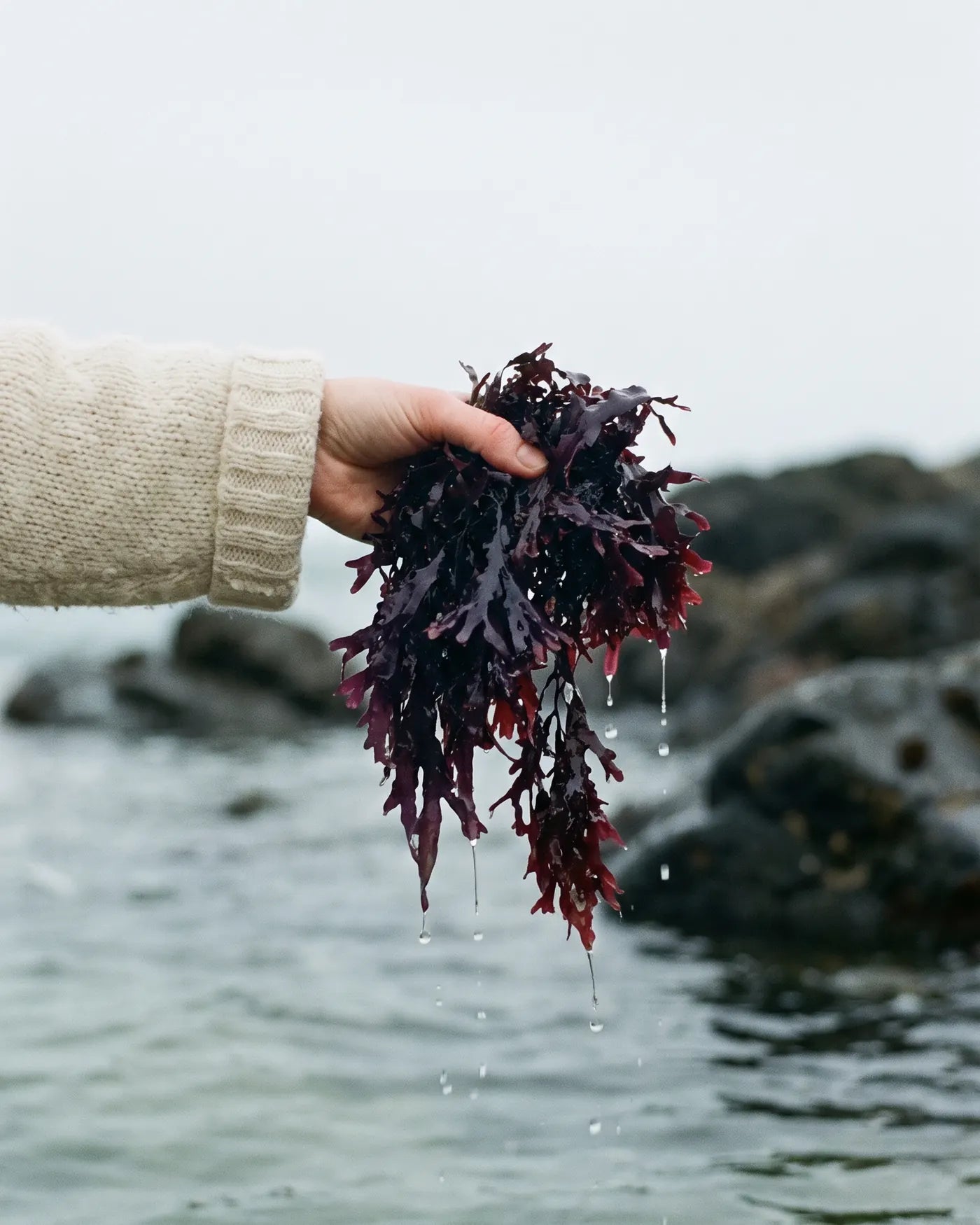
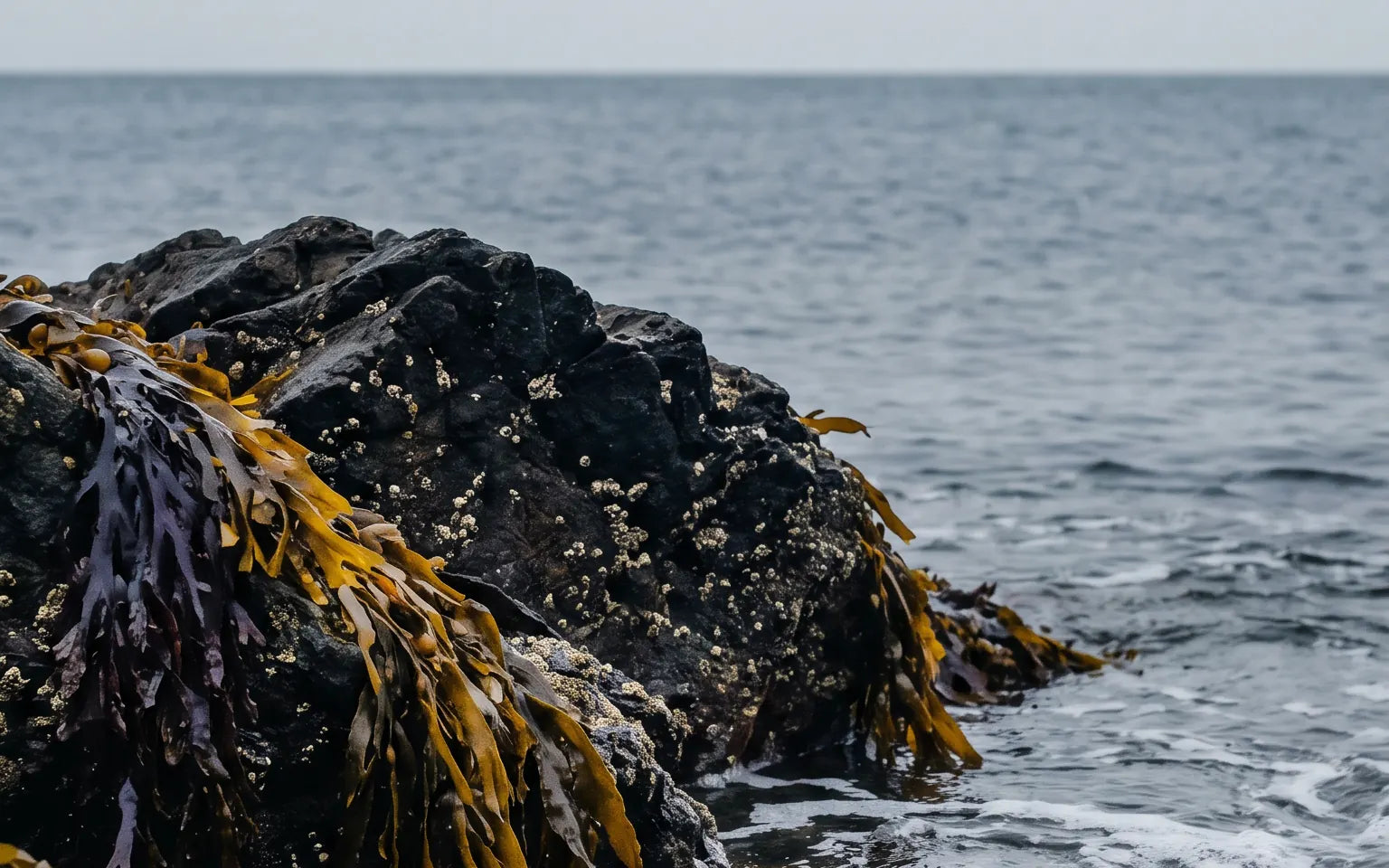
Wild fronds from one patch of coast are rarely one color.

02

What color does not tell you

This is the part the category gets wrong, in both directions.

You will read that purple carries more antioxidants because of the pigment, and that gold is purer because it is paler. Both are stories built backwards from a color. The mineral content of any sea moss depends on the water it grew in, the season and the species — and the only way to know what is in a specific jar is a laboratory analysis of that batch.

So we are not going to tell you that one of our colors does more than the other, because we cannot show you the paperwork that would make it true. Anyone who does tell you that, without publishing a batch analysis, is guessing at best.

What you can compare honestly: color, where it was harvested, what is on the ingredient list, the format, the texture and the taste. That is a real basis for choosing. Pigment as a proxy for power is not.

Side by side

Which of our jars is which

Four of the seven flavors are built on gold, three on purple. Everything here is either on the label or visible in the jar.

Pale

Gold

Straw-colored and translucent. The neutral base: it takes on the color of whatever you add, which matters if you are making something pale.

Color in the jar
Pale straw, translucent
Why
Pigment faded during sun-drying
Our flavors
Gold Pure, Gold Raspberry, Mango, Chocolate Pudding
Best for
Dressings, oats, anything you need to stay light
Taste
Faintly marine, lime behind it
Gold Pure →

Pigmented

Purple

Red-violet, deeper in the jar, and it tints what it joins. The one to use when you want the color to be part of the result.

Color in the jar
Red-violet to deep mauve
Why
More natural pigment kept through drying
Our flavors
Purple Purple, Purple Hibiscus, Smokers Blend
Best for
Iced drinks, smoothie bowls, anything photographed
Taste
Same base; hibiscus adds tartness
Purple Purple →

Flavors available by size and format. Iodine content belongs to the batch and is printed on the label, not estimated here.

What to look at instead of color

  1. The ingredient list

    Short and legible, with nothing on it you cannot identify. Ours is on every jar.

  2. Where it was harvested

    A named coast is a better answer than a continent. Ask, and see whether you get one.

  3. Whether it was wild-harvested or farmed

    Different material with different habits. Both are sea moss; they are not interchangeable.

  4. What the iodine figure is, and where it came from

    The only honest source is a laboratory analysis of that batch. A number in an article is not one.

  5. The format and the size

    A pouch and a jar behave differently in a fridge and in a bag. Pick for how you will actually use it.

  6. Whether the seller makes promises about your body

    The more a page tells you what sea moss will do for you, the less it has told you about what is in the jar.

Questions

Gold, purple and the rest

Is purple sea moss better than gold?

Not on any basis we can document. Color is pigment and handling, not grade. Choose on taste, color in the finished dish, format and what is on the label.

Why is gold sea moss pale?

Because the pigment faded while it dried in the sun. Traditional processing laid the moss out and rinsed it repeatedly over days, and the color went with the light.

Is purple sea moss dyed?

Not in our jars — the color is the plant's own pigment, and there are no artificial colors or flavors in what we sell. Elsewhere, a suspiciously uniform bright purple is worth a question to the seller.

Does gold sea moss taste different from purple?

The base gel tastes the same. What changes the taste is the flavor added to the jar, not the color of the moss.

What about green sea moss?

Bright green sea moss is usually either a different species altogether or a photograph with a filter on it. Wild North Atlantic material does not come out that color.

More on what color really tells you.

Which one should I buy first?

Gold Pure if you want something neutral to cook with. Purple Hibiscus if you want a cold drink with color. Neither is the advanced option.

Pick the color you want in the glass.

Not the color somebody told you was stronger.